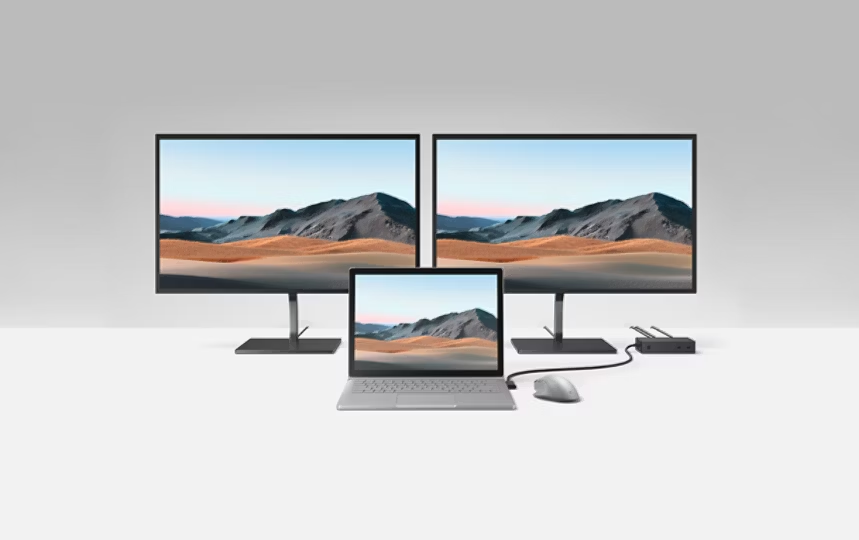
A Windows docking station for dual monitors is one of the most valuable accessories for professionals, students, gamers, and remote workers who want to maximize productivity. Modern laptops are becoming thinner and lighter, but they often lack the ports needed for multiple displays and external devices. A docking station solves this problem by expanding connectivity through a single cable, allowing users to connect dual monitors, keyboards, mice, storage devices, Ethernet, and more.
Whether you work from home, in an office, or frequently switch between locations, understanding how a Windows docking station for dual monitors works can help you create a cleaner, more efficient workspace. This guide explains everything you need to know before choosing and using one.
What Is a Windows Docking Station for Dual Monitors?
A Windows docking station for dual monitors is a hardware device that connects to a Windows laptop or desktop and provides additional ports for peripherals and external displays. Instead of plugging multiple cables into your computer individually, you connect a single cable from the docking station to your device.
The docking station then acts as a central hub, supporting multiple monitors alongside USB accessories, wired networking, audio devices, memory cards, and charging capabilities.
This setup simplifies cable management while improving workflow and reducing desktop clutter.
Why Use a Windows Docking Station for Dual Monitors?
Adding a second monitor has become a standard productivity upgrade. A Windows docking station for dual monitors makes this possible even if your laptop has limited video outputs.
Some major advantages include:
- Increased screen space for multitasking
- Faster workflow for professional applications
- Simplified cable management
- Easy connection of multiple accessories
- Single-cable laptop connectivity
- Convenient charging while working
- Professional workstation appearance
Instead of constantly plugging and unplugging accessories, users simply connect one cable and instantly access their complete workstation.
How a Docking Station Supports Dual Monitors
Most modern docking stations include multiple display outputs such as:
HDMI
HDMI is one of the most common display interfaces and supports high-definition video and audio for modern monitors.
DisplayPort
DisplayPort often provides higher bandwidth than HDMI, making it suitable for higher refresh rates and higher resolutions.
USB-C Display Output
Many modern docking stations use USB-C with DisplayPort Alternate Mode to transmit video signals efficiently.
VGA
Although becoming less common, VGA ports may still be available for compatibility with older monitors.
A quality Windows docking station for dual monitors allows two external displays to work simultaneously while maintaining smooth performance.
Compatibility with Windows Devices
One important consideration is compatibility. Most docking stations support various Windows operating systems, including:
- Windows 11
- Windows 10
- Windows 8.1
- Windows 7 (for selected models)
Compatibility also depends on the laptop’s available connection type.
Common connection interfaces include:
- USB-C
- Thunderbolt
- USB 3.0
- USB 4
- Thunderbolt 4
Before purchasing a Windows docking station for dual monitors, verify that your laptop supports video output through its USB-C or Thunderbolt port if applicable.
Essential Features to Look For
Not all docking stations offer the same capabilities. Choosing the right one depends on your daily workflow.
Multiple Display Outputs
Ensure the docking station includes enough HDMI or DisplayPort outputs to support two monitors without additional adapters.
High Resolution Support
Many premium docking stations support:
- Dual 1080p displays
- Dual 1440p displays
- Dual 4K displays
- Even higher resolutions on compatible hardware
USB Connectivity
Extra USB ports make it easy to connect:
- Keyboard
- Mouse
- Webcam
- External SSD
- USB flash drives
- Printers
Ethernet Port
A Gigabit Ethernet connection provides faster and more reliable internet compared to Wi-Fi in many environments.
Audio Connections
Dedicated headphone and microphone ports simplify meetings, gaming, and multimedia use.
SD Card Reader
Content creators often benefit from built-in SD and microSD card readers.
Power Delivery
Many docking stations charge compatible laptops while simultaneously connecting all peripherals.
Benefits for Remote Work
Remote work has increased demand for efficient workstations. A Windows docking station for dual monitors helps employees create office-quality setups at home.
With two displays, users can:
- Attend virtual meetings on one screen
- Edit documents on another
- Monitor emails while working
- Compare spreadsheets
- Manage multiple browser windows
- Improve overall organization
The ability to disconnect everything with one cable also makes transitioning between office and home effortless.
Advantages for Business Professionals
Professionals across many industries rely on dual-monitor workstations.
Examples include:
- Financial analysts tracking data
- Software developers writing code
- Graphic designers managing creative projects
- Video editors organizing timelines
- Engineers reviewing technical drawings
- Customer support teams handling multiple applications
- Project managers monitoring dashboards
A reliable Windows docking station for dual monitors enables smoother multitasking while reducing interruptions.
Gaming and Entertainment
Although docking stations are primarily productivity tools, many users also enjoy multimedia benefits.
Dual-monitor gaming setups can be useful for:
- Streaming gameplay
- Monitoring chat
- Running communication software
- Displaying performance statistics
- Watching videos while browsing
For entertainment, dual displays allow users to watch media on one screen while managing other tasks on the second.
Common Setup Process
Installing a docking station is generally straightforward.
Step 1
Connect the docking station to power if required.
Step 2
Connect both monitors using HDMI or DisplayPort cables.
Step 3
Attach USB accessories like keyboards and mice.
Step 4
Connect Ethernet if a wired internet connection is desired.
Step 5
Connect the docking station to your Windows laptop using the appropriate cable.
Windows usually detects the hardware automatically.
Step 6
Adjust display settings to arrange monitor positions and choose your preferred display mode.
Troubleshooting Common Issues
Most docking station problems have simple solutions.
Monitor Not Detected
Check cable connections, monitor input selection, and Windows display settings.
Incorrect Resolution
Update graphics drivers and confirm the docking station supports the desired resolution.
USB Devices Not Working
Reconnect the docking station or test the USB ports individually.
Charging Problems
Verify that both the docking station and laptop support USB Power Delivery.
Driver Updates
Some docking stations require manufacturer drivers or firmware updates for optimal performance.
Choosing the Right Docking Station
When selecting a Windows docking station for dual monitors, consider your long-term needs rather than only your current setup.
Questions to ask include:
- How many USB ports do you need?
- Will you upgrade to higher-resolution monitors later?
- Do you require Ethernet?
- Is laptop charging important?
- Will you use external storage frequently?
- Do you need audio ports or SD card readers?
Investing in a docking station with room for future expansion often provides better long-term value.
Tips for Better Performance
To get the best experience from your Windows docking station for dual monitors, follow these recommendations:
- Keep Windows updated.
- Install the latest graphics drivers.
- Use certified HDMI or DisplayPort cables.
- Avoid low-quality USB hubs between the dock and peripherals.
- Position monitors ergonomically.
- Organize cables for easier maintenance.
- Restart the docking station occasionally if devices become unresponsive.
Proper maintenance helps ensure stable connections and consistent performance.
Conclusion
A Windows docking station for dual monitors is an excellent investment for anyone looking to improve productivity, organization, and connectivity. By transforming a single laptop into a fully functional workstation, it simplifies everyday tasks while reducing cable clutter and setup time.
Whether you are working remotely, managing business applications, creating digital content, studying, or simply enjoying a more organized desktop, a Windows docking station for dual monitors offers flexibility and convenience that modern users appreciate. By selecting a model with the right ports, display support, charging capabilities, and compatibility, you can build a workstation that remains efficient for years to come.
About the Author